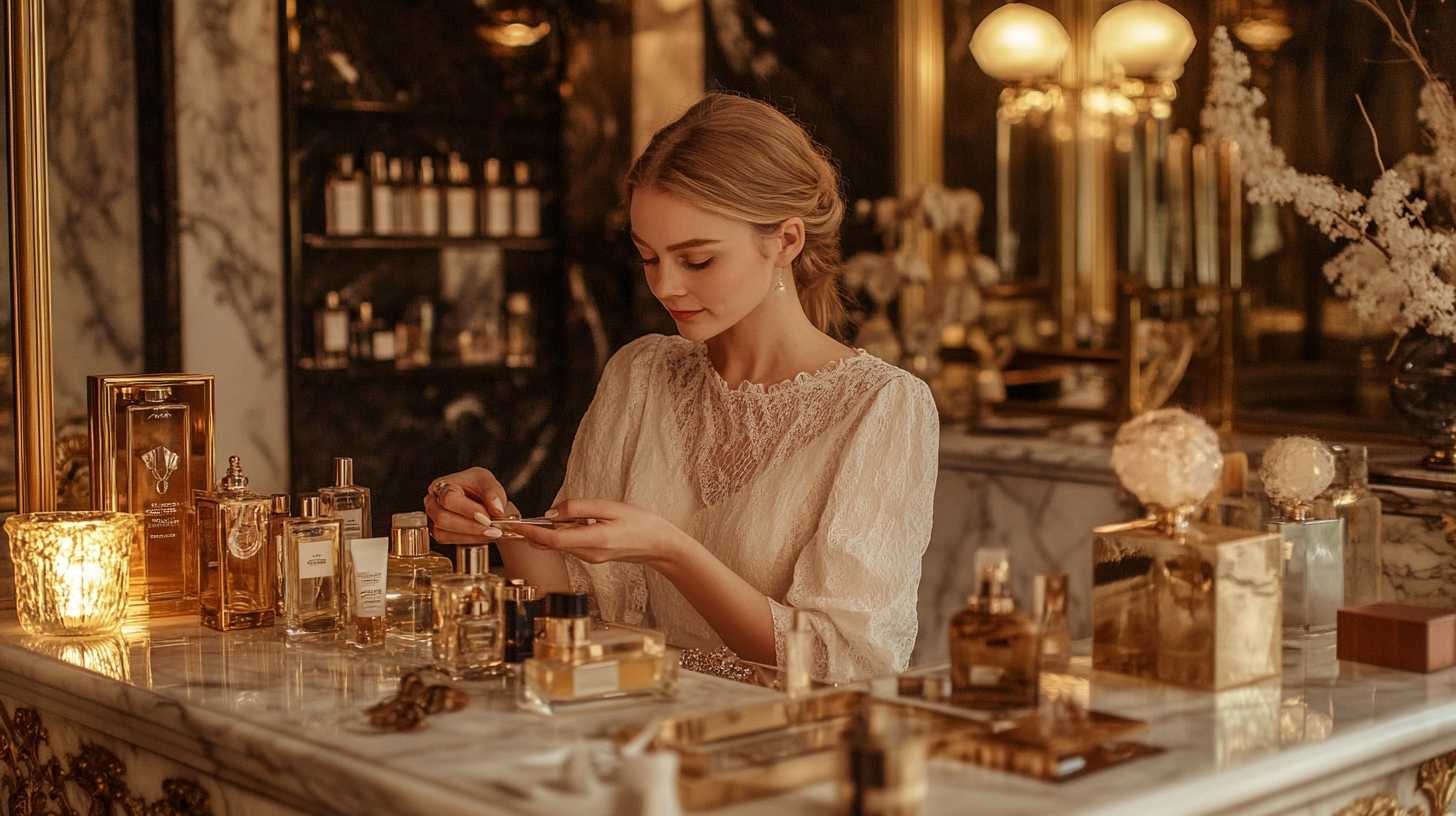

Walking into the world of perfume layering for the first time can feel strangely intimidating.
One minute you’re casually browsing fragrances…
and the next you’re watching someone online combine:
- saffron oud
- smoked vanilla
- salted pistachio cream
- Japanese incense oil
- and “a hint of clean skin musk”
Suddenly fragrance layering sounds less like self-care and more like advanced chemistry.
But here’s the truth nobody tells beginners:
You do not need a 47-bottle perfume collection or the nose of a Parisian master perfumer to start layering successfully.
In fact, the best fragrance combinations are usually the simplest ones.
This guide will help you choose your very first perfume layering pair without spiraling into overthinking, buyer’s remorse, or accidentally smelling like a haunted bakery.
Let’s simplify everything.
First: What Is a “Layering Pair”?
A layering pair is simply:
two scents designed to work together.
That’s it.
Usually:
- one acts as the foundation
- the other adds contrast, texture, or depth
Think of it like fashion.
A white T-shirt becomes more interesting with:
- a leather jacket
- gold jewelry
- cashmere coat
- tailored blazer
Same shirt.
Different mood.
Perfume layering works exactly the same way.
Why Beginners Overcomplicate Layering
Most people think fragrance layering means:
- mixing five perfumes at once
- memorizing fragrance pyramids
- learning mysterious French perfume vocabulary
- becoming emotionally unstable inside Sephora
None of that is necessary.
The goal is not to smell “complicated.”
The goal is to smell:
- memorable
- balanced
- luxurious
- personal
And surprisingly, simple combinations often smell the most elegant.
The Golden Rule: Start With a Fragrance You Already Love
Do not begin with random perfumes TikTok convinced you to buy.
Start with something you already enjoy wearing.
Ask yourself:
“What fragrance do I already love on its own?”
That becomes your anchor scent.
Usually beginners gravitate toward:
- vanilla
- musk
- amber
- fresh citrus
- soft florals
- sandalwood
Perfect.
Those are layering-friendly.
The Easiest Beginner Formula Ever
If you remember ONE thing from this article, make it this:
Warm + Fresh
or
Soft + Deep
That’s the secret.
You want balance.
Examples:
- Vanilla + Bergamot
- Musk + Rose
- Amber + Lavender
- Sandalwood + Citrus
- Coconut + Woods
One scent adds comfort.
The other adds brightness or structure.
Easy.
Why Vanilla Is the Ultimate Beginner Fragrance
Vanilla is basically the universal adapter of perfume.
It works with almost everything.
Seriously.
Vanilla can become:
- sexy
- cozy
- elegant
- smoky
- clean
- creamy
- mysterious
Depending on what you pair it with.
Vanilla + Lavender
Clean and calming
Vanilla + Oud
Dark luxury
Vanilla + Citrus
Fresh dessert energy
Vanilla + Tobacco
Warm seductive richness
Vanilla makes layering easier because it softens sharp fragrances and connects different notes together naturally.
This is why so many luxury layering brands build entire collections around vanilla.
Beginner-Friendly Layering Pairs That Always Work
Here are combinations that are almost impossible to mess up.
1. Vanilla + Amber
Smells Like:
Golden warmth and expensive sweaters.
Why It Works:
Both notes are naturally smooth and comforting.
Perfect for:
- evenings
- colder weather
- cozy luxury vibes
Difficulty level:
Beginner-proof.
2. Bergamot + Musk
Smells Like:
Fresh-out-of-a-luxury-hotel-shower energy.
Why It Works:
Citrus adds brightness.
Musk adds softness.
Result:
Clean, effortless sophistication.
3. Rose + Sandalwood
Smells Like:
Someone who definitely owns silk pillowcases.
Why It Works:
Floral sweetness balances creamy woods beautifully.
Elegant without smelling “too floral.”
4. Coconut + Vanilla
Smells Like:
A luxury beach vacation where nobody checks emails.
Why It Works:
They naturally blend into creamy warmth.
Comforting and addictive.
5. Lavender + Tonka Bean
Smells Like:
Calm confidence.
Why It Works:
Lavender freshens.
Tonka adds warmth and depth.
Very “clean rich person” energy.
Don’t Pair Two Extremely Loud Fragrances
This is where beginners go wrong.
If both perfumes are:
- smoky
- spicy
- heavy
- ultra-sweet
- aggressively projecting
…they compete instead of blending.
It becomes fragrance warfare.
You want harmony, not a custody battle between perfumes.
A Simple Trick: One Perfume Should “Lead”
Imagine your fragrances are dancing.
One leads.
One follows.
Examples:
- Vanilla leads, citrus supports
- Amber leads, musk softens
- Rose leads, woods deepen
If both scents scream for attention equally, the result feels chaotic.
Should You Spray Them Directly Together?
You can.
But beginners usually get better results by layering separately.
Better Method:
- Spray heavier scent first
- Wait a few seconds
- Apply lighter scent nearby
This gives each fragrance room to breathe.
Where You Apply Fragrance Matters
Placement changes everything.
Try:
- vanilla on neck
- musk on wrists
- sandalwood on clothing
Now the fragrance evolves differently as your body warms up.
Luxury fragrance stylists use this trick constantly.
Lotion + Perfume = Secret Weapon
Here’s something most people discover way too late:
Body lotion massively improves perfume layering.
Especially:
- vanilla lotion
- unscented cream
- body oils
- shea butter
Moisturized skin holds scent longer and makes fragrances smell smoother.
A great layering routine often looks like:
- scented body wash
- lotion
- perfume oil
- fragrance spray
This creates depth and longevity naturally.
You Don’t Need Expensive Perfume to Start
This part surprises people.
You can create beautiful layering combinations using:
- affordable body mists
- drugstore lotions
- simple vanilla oils
- inexpensive musk fragrances
In fact, many luxury fragrance lovers intentionally combine:
- niche perfumes
- affordable basics
- oils
- lotions
because layering is about the result — not the price.
Nobody smells your bank account.
They smell the final blend.
Test Your Layering Combo Before Going Out
Very important.
Some combinations smell incredible initially…
then become strange after 20 minutes.
Always test:
- on skin
- over time
- in real conditions
Perfume changes as it dries down.
Give it time before deciding.
The Biggest Beginner Mistake: Overthinking Everything
Fragrance should be enjoyable.
Not stressful.
You do not need:
- expert-level perfume vocabulary
- niche fragrance obsession
- encyclopedic note knowledge
You only need:
“Does this smell good together?”
That’s the real test.
Some of the best layering combinations happen completely by accident.
Your Goal Isn’t Perfection — It’s Personality
Perfume layering becomes magical when it starts feeling personal.
Maybe your signature becomes:
- vanilla + smoke
- citrus + musk
- rose + amber
- lavender + woods
Eventually people stop saying:
“What perfume are you wearing?”
And start saying:
“You always smell amazing.”
That’s the difference.
Final Thoughts
Your first layering pair doesn’t need to be complicated.
Start simple.
Choose balance.
Trust your nose.
The best fragrance combinations are often:
- soft
- effortless
- intuitive
- emotional
Not over-engineered.
Because perfume layering isn’t really about creating the “perfect” scent.
It’s about creating your scent.
And honestly?
That’s far more interesting.